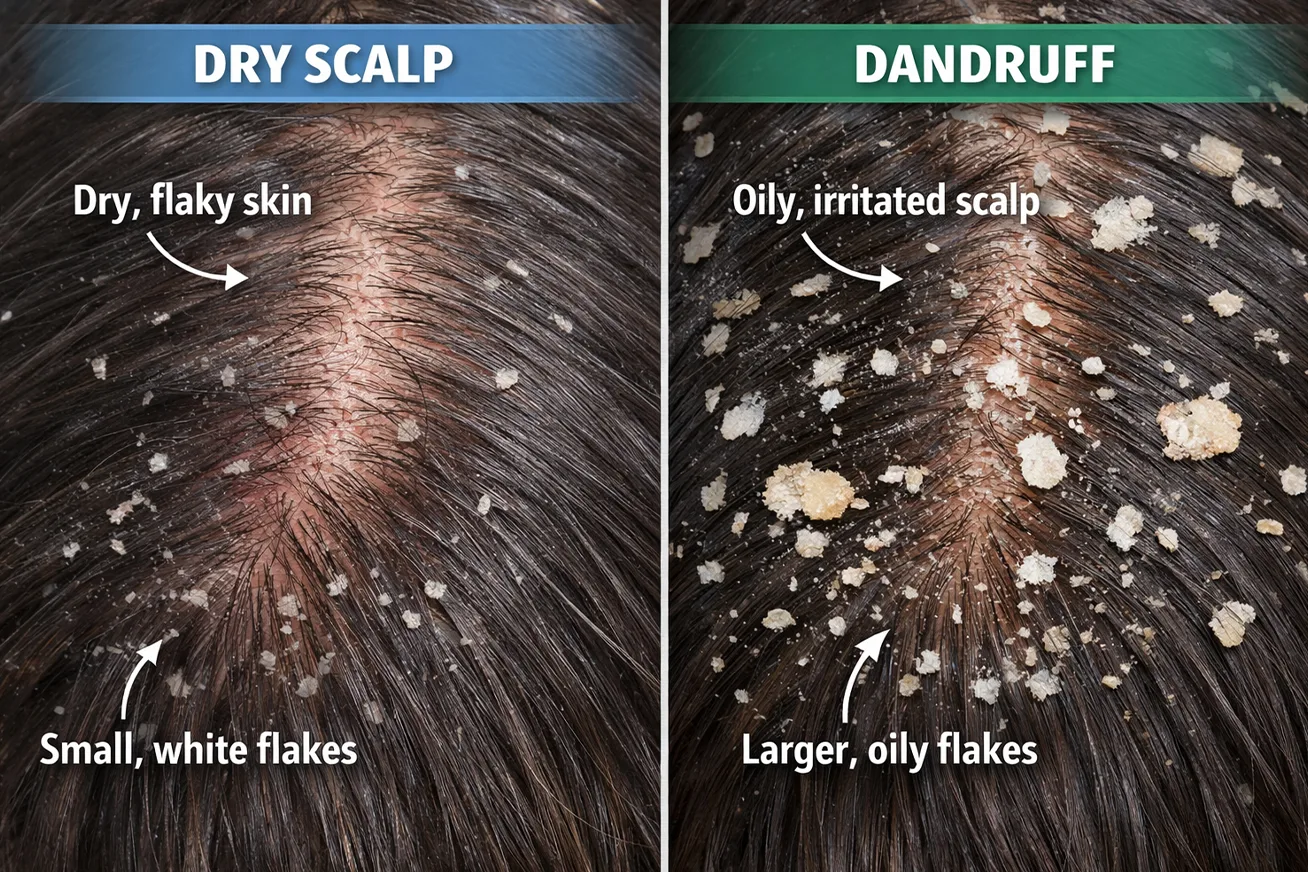
How to Get Rid of Severe Dandruff and Dry Scalp: Causes and Solutions
If you are noticing itchiness, flaking, or discomfort on your scalp, you may be unsure whether the issue is dry scalp or dandruff. Although these terms are often used interchangeably, it is important to recognise that dry scalp is frequently a symptom of the broader dandruff condition. This article explains what dandruff is, what causes it, and how this common scalp concern can be managed effectively.
What is Dandruff?
Dandruff is a common scalp condition marked by white or yellowish flakes on the scalp and hair. It is often accompanied by itching and may be influenced by several contributing factors. Here are some essential facts you should know about dandruff:
Dandruff Symptoms
-
Flakes: Dandruff usually appears as visible flakes that may fall onto the shoulders or clothing.
-
Itchiness: Persistent scalp itching is a frequent symptom among people with dandruff.
-
Oily Scalp: Dandruff is commonly linked with an oily scalp, as excess sebum production can create conditions that encourage the overgrowth of Malassezia, a fungus associated with dandruff.
Dry Scalp as a Symptom of Dandruff
Dry scalp describes a condition in which the scalp does not retain enough moisture, resulting in tightness, irritation, and flaking. When related to dandruff, dry scalp is often considered a symptom rather than a separate issue. The relationship between the two can be explained as follows:
Characteristics of Dry Scalp
-
Moisture Loss: Dry scalp is generally caused by moisture loss, which may be worsened by dandruff. Dandruff can contribute to damage of the scalp barrier and a reduction in intercellular lipids, leading to increased trans-epidermal water loss and feelings of dryness and tightness.
-
Tightness and Itchiness: Those with a dry scalp may notice a tight sensation and itching, especially after washing their hair.
The Connection Between Dandruff and Dry Scalp
Dandruff can weaken the scalp barrier, resulting in moisture loss. This loss of moisture often gives rise to dry scalp symptoms. When the scalp is unable to maintain its natural moisture balance, discomfort such as tightness and irritation may develop. As a result, managing dandruff effectively can also help reduce dry scalp symptoms.
How to Manage Dandruff and Dry Scalp
To manage dandruff and the related signs of dry scalp, the following approaches may be helpful:
1. Use Anti-Dandruff Shampoo
Choose shampoos that contain active ingredients such as zinc pyrithione or selenium sulphide, which help manage the fungal overgrowth associated with dandruff. Head & Shoulders Deep Cleanse Anti-Dandruff Shampoo is designed to deeply cleanse the scalp, helping remove build-up and impurities that can contribute to flakes. Another suitable option is Head & Shoulders Smooth and Silky 2-in-1 Anti-Dandruff Shampoo, which helps control dandruff while leaving hair smooth and manageable. Regular use of these shampoos supports a healthier scalp environment by reducing irritation and helping maintain overall scalp balance.
2. Establish a Regular Washing Routine
Washing frequently with an anti-dandruff shampoo helps clear excess oil and flakes from the scalp. This routine allows the active ingredients to work effectively, keeping the scalp clean, minimising build-up, and controlling the fungus that contributes to scalp irritation.
3. Moisturise the Scalp
If dry scalp symptoms persist, adding a moisturising shampoo or conditioner to your routine may help support scalp hydration.
4. Stay Hydrated
Drinking sufficient water and using a humidifier in dry conditions can help support moisture levels in the scalp and reduce dryness.
Conclusion
Dry scalp is often part of the broader dandruff condition and needs to be addressed to manage it effectively. Focusing on the underlying causes of dandruff, such as Malassezia overgrowth, excess oil, and moisture loss, helps reduce flakes, itching, and scalp tightness. With preventative care and a consistent routine, dandruff can be kept under control while supporting long-term scalp health.
Frequently Asked Questions (FAQs)
1. What causes dry scalp?
Dry scalp occurs when the skin on the scalp lacks sufficient moisture. Environmental factors or underlying conditions, such as dandruff, can cause the scalp to feel dry and tight.
2. Can I use regular shampoo if I have dandruff?
While you can use a regular shampoo, it’s generally better to opt for an anti-dandruff shampoo formulated with active ingredients like oxygenated charcoal, which helps reduce dandruff caused by product build-up and excess oil, and piroctone olamine, which targets dandruff-causing microbes and can also help keep dandruff under control.
3. How often do dermatologists recommend washing hair for dry scalp?
Washing the hair regularly, at least every other day, can help remove build-ups and keep the scalp clean. Individual routines may vary, but regular use of an anti-dandruff shampoo can help address both the symptoms and underlying causes of dry scalp.
4. What gentle shampoo can I use daily for severe dry scalp and dandruff without irritating my skin?
You can use a Head & Shoulders shampoo from the Dry Scalp/ Sensitive Scalp range from Head & Shoulders India, which is formulated to moisturise dry skin while treating dandruff without causing strong irritation. These options balance scalp hydration with effective dandruff control, making them suitable for gentle daily use.
5. What is the most effective anti-dandruff shampoo for severe dandruff and dry scalp relief?
For severe dandruff with dryness, the Head & Shoulders Dry Scalp Care range is highly effective. It targets stubborn flakes while delivering added moisturisation to relieve dryness and itch, making it suitable for regular use without over-stripping the scalp.