
Best Shampoo for Flaky Dandruff: Effective Ingredients & Why Some Treatments Don't Work
Flaky dandruff is one of the most common scalp concerns people face. You may notice white flakes on your shoulders, itching along the scalp, or greasy scales that appear soon after washing your hair.
The reason is simple: not all dandruff shampoos work the same way. Different active ingredients target different causes of dandruff, and some ingredients may be better suited for recurring or stubborn flakes than others. If you've tried multiple shampoos without lasting results, understanding the ingredients behind them can help you make a more informed choice.
What Causes Flaky Dandruff?
Dandruff is often linked to an overgrowth of a naturally occurring scalp microorganism called Malassezia. When it grows out of balance, it can contribute to irritation, excess scalp cell turnover, and visible flakes. Other factors such as excess oil production, scalp sensitivity, stress, weather changes, and inconsistent scalp care can also make dandruff worse.
The result is often:
● White or yellowish flakes on the scalp and clothing
● Itching or irritation
● A greasy or oily scalp
● Recurring flare-ups that seem to come back even after treatment
This is why simply washing more often may not be enough. The active ingredient in your shampoo matters.
Key Takeaway
● Flaky dandruff is often linked to an imbalance of Malassezia, a naturally occurring scalp yeast.
● Excess oil, scalp sensitivity, stress, and environmental factors can worsen symptoms.
● Simply washing away flakes doesn't address the underlying cause.
● Effective dandruff management starts with choosing the right active ingredient.
Clinically Proven Ingredients Dermatologists Recommend for Flaky Dandruff
Not all active ingredients provide the same benefits. Understanding how they work can help you choose the right shampoo for your scalp.
1. Selenium Sulfide
When dandruff becomes persistent, one of the main culprits is often an overgrowth of Malassezia, a naturally occurring yeast that lives on the scalp. In some people, Malassezia can multiply excessively, triggering irritation, increased scalp cell turnover, and the stubborn flakes that keep returning even after washing.
This is where Selenium Sulfide stands out. Unlike ingredients that focus primarily on removing visible flakes, Selenium Sulfide helps address the underlying conditions that allow Malassezia to thrive, while also slowing excessive scalp cell turnover. This dual action makes it particularly effective for recurring or difficult-to-manage dandruff.
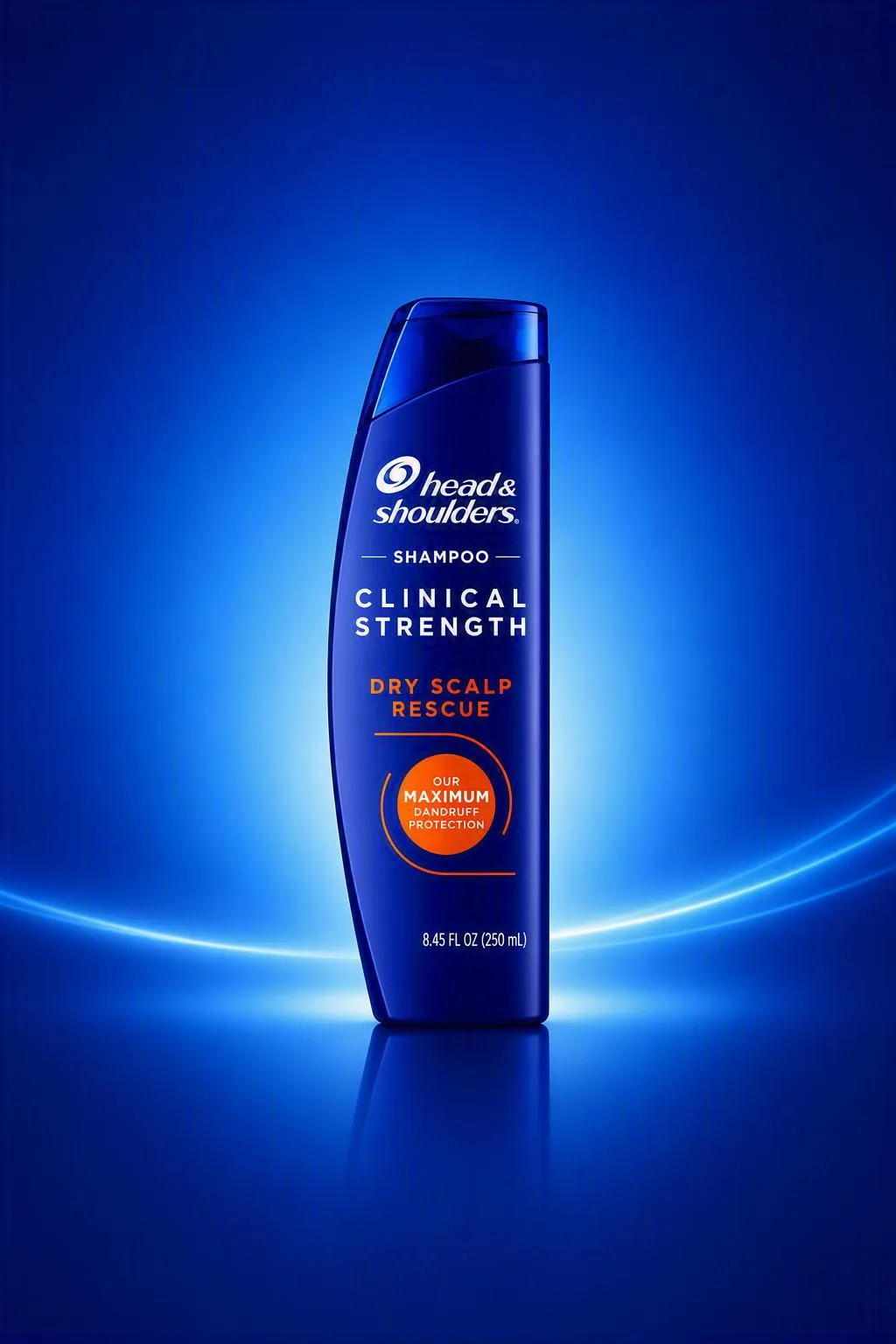
To tackle stubborn flakes, try Head & Shoulders Clinical Strength Dry Scalp Rescue 2-in-1, powered by 1% Selenium Sulfide , a dermatologist recommended active that targets the main cause of dandruff at the source. Its advanced formula delivers more dandruff fighting power and is 4X stronger than regular anti dandruff shampoos, helping break the cycle of stubborn dandruff. Thanks to its unique technology, it deposits 1.5X more Selenium Sulfide on the scalp, enabling it to start working up to 2X faster and kill dandruff causing germs faster than ketoconazole. It can help deliver a dandruff-free scalp from the very first wash, while conditioning agents keep hair soft and smooth after every use. The formula is also designed to help maintain the scalp barrier, making it gentle enough for regular use while providing powerful, long lasting dandruff protection.
2. Piroctone Olamine
Piroctone Olamine(PO) has become increasingly popular in modern anti-dandruff formulations because it offers effective flake control while remaining gentle enough for regular use. It helps maintain a healthier scalp environment, making it a suitable choice for people looking to manage dandruff consistently without relying on stronger medicated treatments. Its balance of efficacy and scalp comfort has made it a go-to ingredient for long-term dandruff management.
This approach is reflected in formulas such as Head & Shoulders Deep Cleanse Anti-Dandruff Shampoo, which combines Piroctone Olamine with an oxygenated charcoal formula to deeply cleanse the scalp and remove excess oil, dirt, and build-up. Designed specifically for oily, sticky dandruff, it provides up to 100% oily, sticky dandruff protection^, helps fight dandruff-causing microbes and prevent them from coming back, and leaves the scalp feeling deeply refreshed and clean after every wash.
^ Only visible flakes. With regular use of at least 3 times a week
3. Ketoconazole
Ketoconazole is a widely used antifungal ingredient that plays an important role in managing dandruff, particularly when symptoms become persistent or recurrent. It works by helping control the fungal activity associated with dandruff, which can contribute to ongoing flaking, itching, and scalp discomfort. As a result, it is commonly included in treatment-focused anti-dandruff formulations.
Ketoconazole is also commonly used in shampoos intended to support the management of seborrheic dermatitis , a scalp condition that can cause persistent flaking, redness, and irritation. When used as directed, it can help reduce visible scaling and improve overall scalp comfort, making it a trusted option for individuals dealing with more stubborn dandruff concerns.
4. Salicylic Acid
Salicylic Acid takes a different approach to dandruff management than many traditional anti-dandruff ingredients. Rather than targeting the factors that contribute to dandruff, it works as a exfoliating agent, helping to loosen and lift away the buildup of dead skin cells that can accumulate on the scalp. This can make flakes less visible and help the scalp feel cleaner and less congested.
Its exfoliating properties make Salicylic Acid particularly useful when dandruff is accompanied by thick scales, stubborn flakes, or noticeable scalp buildup. By helping remove excess debris from the scalp surface, it can improve the overall appearance and feel of the scalp while reducing the accumulation of visible flakes.
Key Takeaway
● Not all anti-dandruff ingredients work the same way some target the root cause, while others mainly remove visible flakes.
● The right ingredient depends on your dandruff type, whether it's oily, persistent, buildup-related, or linked to seborrheic dermatitis.
Why Some Dandruff Treatments Don't Work
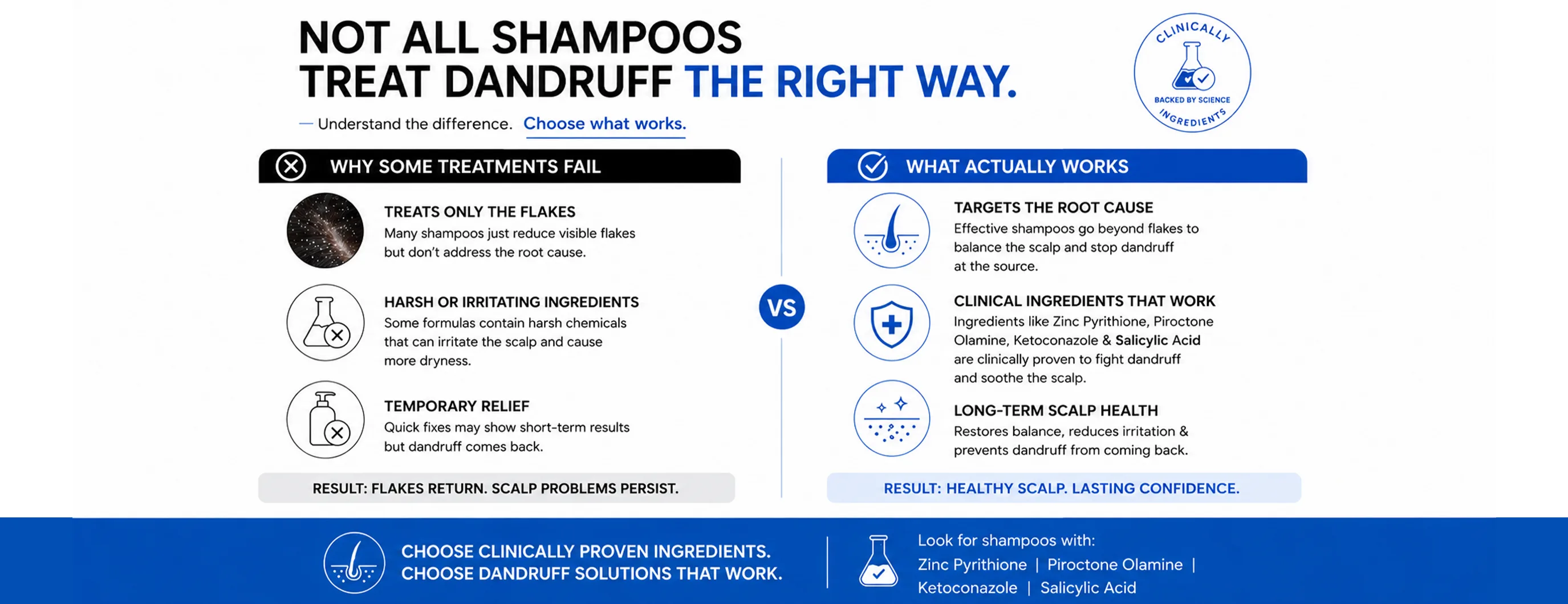
Many people assume that all anti-dandruff shampoos work the same way. In reality, different active ingredients target dandruff differently. Some products only remove flakes from the scalp surface, while others help control the microorganisms and scalp conditions that contribute to dandruff. If the active ingredient doesn't match your scalp's needs, flakes can quickly return after washing. Common reasons dandruff treatments fail include:
● Using a shampoo that only cleanses but doesn't target the root cause.
● Stopping treatment as soon as flakes improve.
● Not leaving the shampoo on the scalp long enough.
● Choosing an ingredient that's too harsh or not suitable for regular use.
● Treating dandruff when the condition may actually be seborrheic dermatitis, psoriasis, or another scalp concern.
Key Takeaway
● Not all anti-dandruff ingredients work in the same way. Using the wrong active ingredient can lead to recurring flakes.
● Inconsistent use and stopping treatment too early reduce effectiveness.
● Some scalp conditions may require a different treatment approach than dandruff.
Do Anti-Dandruff Shampoos Provide Long-Term Control?
Many shampoos claim long-term dandruff protection, but dermatologists clarify that dandruff usually requires ongoing management rather than a one-time treatment.
Most antifungal shampoos begin showing visible improvement within two to three weeks. However, dermatologists often recommend using the product consistently for four to eight weeks before judging results. This allows enough time to control yeast growth and restore scalp balance.
Once flakes reduce, people often shift to a maintenance routine. This may involve alternating between a mild anti-dandruff shampoo and a regular shampoo. Maintenance washing helps prevent dandruff from returning without over-treating the scalp. Long-term control also depends on lifestyle factors. Stress, hormonal changes, and diet can influence scalp health. Managing these triggers helps keep dandruff under control over time.
Key Takeaway
● Anti-dandruff shampoos usually require 4–8 weeks for noticeable results.
● Long-term control involves maintenance washing after treatment.
● Alternating shampoos helps prevent scalp irritation. Stress, hormones, and diet can influence dandruff recurrence.
Building a Scalp Care Routine That Keeps Flakes Away
Managing flaky dandruff becomes easier when you follow a consistent scalp care routine. The goal is to control oil buildup, limit yeast growth, and maintain a healthy scalp environment. Start by choosing a shampoo with clinically proven ingredients suited to your scalp type. Use it regularly and allow the active ingredients enough contact time. Avoid heavy styling products that create buildup on the scalp.
Keeping your scalp clean after sweating, reducing stress, and maintaining balanced nutrition also support scalp health. These small habits help prevent conditions that trigger dandruff. Most importantly, patience matters. When used consistently, the right anti-dandruff shampoo and routine can significantly reduce flakes and keep your scalp comfortable.
Key Takeaway
● Choose shampoos with clinically proven antifungal ingredients.Maintain a consistent washing routine for best results.
● Avoid heavy product buildup on the scalp.Lifestyle habits such as stress management support scalp health.
Conclusion
Flaky dandruff is often more than a cosmetic issue; it reflects an imbalance on the scalp. However, it becomes manageable when you understand what causes it and how treatments work. The right anti-dandruff shampoo, used consistently and chosen for your scalp type, helps control yeast growth, reduce excess oil, and limit flaking. When combined with proper scalp care habits and regular use over several weeks, these treatments support long-term dandruff control and a healthier scalp.
FAQs
1. Which anti-dandruff shampoo works well for oily, flaky scalp dandruff in India?
For oily, flaky dandruff, shampoos that cleanse excess oil while targeting dandruff-causing microbes work best. Shampoos formulated with 1% Selenium Sulfide, such as those in the Head & Shoulders Clinical Strength range, are designed for more persistent dandruff concerns. Along with helping control visible flakes, they can support longer-lasting dandruff protection and help break the cycle of recurring scalp symptoms. Regular use may also help reduce oil buildup and scalp discomfort, leaving the scalp feeling cleaner and more balanced.
2. What shampoo do dermatologists recommend for flaky dandruff?
Dermatologists usually recommend shampoos that contain antifungal ingredients such as selenium sulfide or piroctone olamine. These ingredients help reduce the growth of dandruff-causing yeast while calming scalp irritation.
3. What works best for oily, flaky dandruff?
Oily dandruff often responds well to shampoos that combine antifungal protection with deep cleansing ingredients. Formulas that control scalp oil while targeting yeast help reduce sticky flakes.
4. How long does it take for anti-dandruff shampoo to work?
Most treatments begin improving flakes within two to three weeks. Dermatologists recommend consistent use for four to eight weeks for noticeable and lasting results.
5. Why do anti-dandruff shampoos fail to clear flaky dandruff in some people?
Anti-dandruff shampoos may not work effectively if they are used inconsistently or stopped too early. Clinical studies show that active ingredients need several weeks of regular use to control dandruff-causing microbes. In some cases, flakes persist because the shampoo is rinsed too quickly, the ingredient concentration is insufficient, or underlying scalp conditions require targeted treatment.