
Oily vs Dry Dandruff: Two Types of Flaking That Need Very Different Care
This blog has been reviewed and approved by
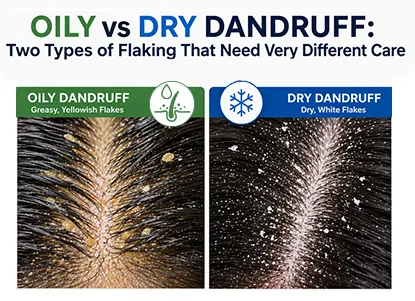
Most people assume dandruff is just “white flakes.” But clinically, we see two very different patterns — oily dandruff and dry dandruff. While both involve flaking and itchiness, the scalp environment, texture of flakes and recurrence pattern vary significantly. Identifying which type you have is important because each requires a slightly different care approach. Using a generic shampoo without understanding your scalp often leads to temporary relief and repeated flare-ups.
What Causes Dandruff?
Dandruff is a recurring scalp condition linked to an imbalance involving a naturally occurring fungus called Malassezia Globosa. This organism feeds on scalp sebum, the natural oil your skin produces. In some individuals, the scalp is more sensitive to the by-products of this fungus. This sensitivity can trigger irritation and accelerate skin cell turnover. Instead of shedding invisibly, skin cells accumulate and appear as visible flakes. Itching, mild redness and discomfort may accompany the flaking. While fungal involvement is common in most cases of dandruff, the amount of oil on the scalp influences how the condition presents.
Oily Dandruff: When Excess Oil Drives the Flaking
What It Looks Like
Oily dandruff typically presents as yellowish or off-white flakes that appear slightly sticky or clumped together. The flakes often stick to the scalp, or to the nails, instead of falling freely onto clothing.
What It Feels Like
The scalp may feel greasy within a day or two of washing. Itching is often moderate and persistent. Some individuals also notice mild redness or a coated sensation on the scalp.
What’s Happening on the Scalp
Excess sebum creates an environment where Malassezia can thrive. Oil acts as a nutrient source, increasing fungal activity and irritation. Heat, humidity, sweating, helmet use and styling product buildup can worsen this type of dandruff.
Simply washing more frequently or using a cosmetic shampoo may remove surface oil temporarily, but it does not address the fungal imbalance. As a result, flakes tend to recur quickly.
Dry Dandruff: Fine Flakes That Fall Like Snow
What It Looks Like
Dry dandruff appears as fine, powdery white flakes that fall easily onto shoulders. They are often more noticeable on the shoulders of dark clothing.
What It Feels Like
The scalp may feel mildly tight or slightly dry. Itching is usually mild to moderate rather than intense.
What’s Happening on the Scalp
Dry dandruff is often mistaken for simple dryness caused by weather changes or harsh products. While environmental dryness can contribute, recurring powdery flaking is frequently still linked to fungal sensitivity. Even if the scalp is not very oily, Malassezia can still trigger accelerated cell turnover in susceptible individuals.
In such cases, increasing oiling or using only moisturising shampoos may improve comfort but may not resolve the underlying cause if fungal imbalance persists.
Why Each Type Needs Different Care
The key difference between oily and dry dandruff lies in scalp oil levels and flake texture. Oily dandruff requires managing excess sebum along with fungal control. Dry dandruff requires maintaining scalp balance without over-stripping natural oils, while still addressing fungal activity. In both cases, relying on regular, non anti dandruff shampoos that simply cleanse the hair is often insufficient. These products may wash away visible flakes temporarily but do not target the root cause. For effective and sustained control, it is important to look for clinically proven anti-fungal ingredients. Piroctone Olamine is one such ingredient that works at the roots to help control the growth of dandruff-causing fungus. By addressing the microbial imbalance rather than just removing surface flakes, it supports long-term scalp health when used consistently.
Here’s why PO is a smart choice for Indian scalps:
-
Gentle enough for daily use
-
Effective in humid and dry seasons
-
Works on both oily and dry scalps
-
Supports scalp health for long-term relief
Whether you wash your hair daily or every few days, PO provides consistent protection without over-drying.
How to Identify Your Dandruff Type
Ask yourself a few simple questions. Does your scalp feel greasy quickly after washing? Are the flakes sticky and clumped? Or are they fine, dry and powdery? Do they return despite moisturising? These observations can help you understand whether oil excess or dryness is playing a larger role.
As a simple test, you can use a small strip of butter paper against the parting of your scalp to check if this gets oily.
Oily and dry dandruff may look different, but both are linked to scalp imbalance. Recognising your dandruff type helps you move beyond trial-and-error and choose targeted scalp care. Turn your shampoo around, read the ingredient list and look for proven scalp-care actives like Piroctone Olamine. Consistent use matters — because dandruff is not a one-time issue, but a recurring condition that requires ongoing scalp-focused care.
Remember to use your anti dandruff shampoo with every wash to ensure dandruff does not return!