
Understanding Dandruff Causes: The Science Behind Why You Get Flakes
Dandruff affects nearly half the global population, yet most people have no idea what actually causes it, blaming everything from poor hygiene to cold weather when the real answer is far more specific. Whether you are dealing with stubborn flakes through India's humid monsoon season, a dry, itchy scalp in winter, or a sudden flare-up with no obvious cause, it almost always traces back to a single microbe living on your scalp right now. Understanding how it works and what makes it worse is the first step to getting rid of dandruff for good.
Table of Contents
What Is Dandruff and Why Does It Happen?
Common Causes and Triggers of Dandruff
Hair Dandruff Types — Know What You Are Dealing With
Dandruff vs. Dry Scalp — How to Tell the Difference
How to Remove Dandruff — What Actually Works
What Is Dandruff and Why Does It Happen?
Dandruff comes down to a single naturally occurring microbe: Malassezia globosa. This fungus lives on every person's scalp, feeding on natural skin oils (sebum). Here is how the flaking process unfolds:
- Malassezia globosa breaks down sebum and releases oleic acid as a by-product
- Around 50% of people are sensitive to oleic acid — their immune system treats it as an irritant
- This triggers inflammation, causing skin cells to shed faster than normal
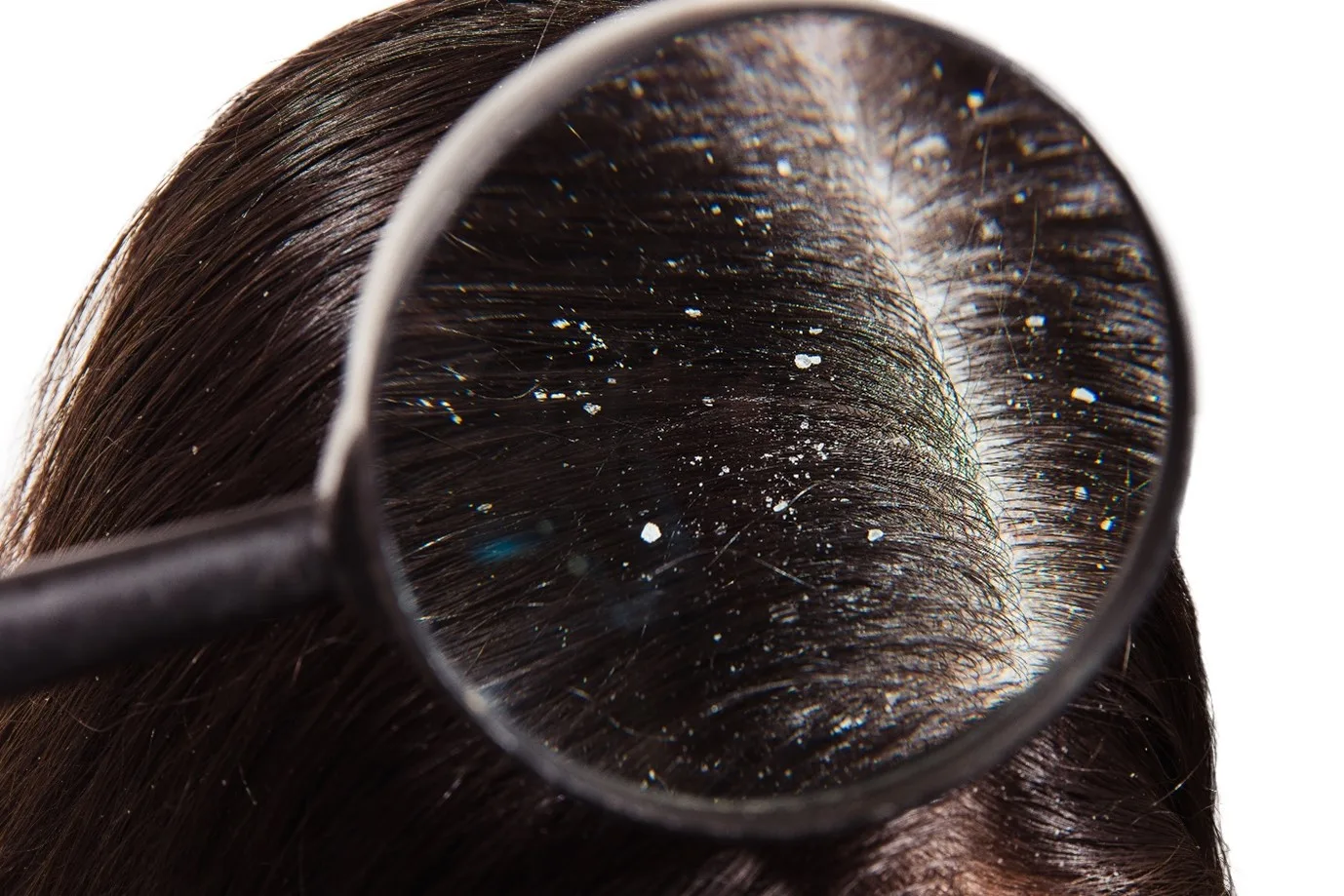
- Excess dead skin cells clump together and appear as white or yellowish flakes
It is a sensitivity response, not a hygiene problem. A 2024 metagenomics study confirmed that dandruff-prone scalps have a less balanced microbiome — higher levels of Malassezia restricta and Staphylococcus capitis, and lower levels of beneficial Cutibacterium acnes — explaining why some people are far more prone to flaking than others.
Key Takeaways
-
Malassezia globosa, a fungus naturally present on every scalp, breaks down sebum into oleic acid — triggering flaking in 50% of people sensitive to it
-
The immune response causes skin cells to shed faster than normal, clumping into the white or yellowish flakes visible on hair and clothing
-
It is a sensitivity reaction, not a hygiene issue — a 2024 study confirms dandruff-prone scalps have a measurably less balanced microbiome
Common Causes and Triggers of Dandruff
Malassezia is the root cause, but several factors determine how active it becomes. Here are the most common triggers — with particular relevance to the Indian climate:
| Cause | How It Triggers Dandruff | India-Specific Relevance |
|---|---|---|
| Excess sebum | Feeds Malassezia directly | Hot climate increases oil output year-round |
| Hormonal factors | Androgens drive higher sebum; dandruff peaks post-puberty and is more common in men | Relevant across all age groups |
| Infrequent shampooing | Sebum, dead skin, and pollutants accumulate | Urban pollution worsens buildup quickly |
| Stress | Raises cortisol, spiking sebum production; ~72% of seborrhoeic dermatitis sufferers cite stress | Academic and work pressure are common triggers |
| Seasonal/climate changes | Cold compromises skin barrier; humidity promotes fungal growth | Monsoon sweat, hard water, and pollution all aggravate dandruff |
| Contact dermatitis | Sensitivity to hair products causes irritation that mimics dandruff | Reaction to heavy oils or chemical treatments |
| Nutritional deficiencies | Low zinc, B vitamins, and omega-3s weaken the scalp barrier | Iron and B12 deficiencies are relatively common in India |
Key Takeaway
-
Excess sebum, hormonal changes, and infrequent shampooing all feed Malassezia — with India's heat and humidity accelerating oil production year-round
-
Stress raises cortisol and spikes sebum output; ~72% of seborrhoeic dermatitis sufferers report stress as a direct flare-up trigger
-
Seasonal shifts, urban pollution, hard water, and contact dermatitis from hair products can all worsen existing dandruff without being the root cause
Hair Dandruff Types — Know What You Are Dealing With
Identifying your dandruff type helps you choose the right remedy to remove it effectively:
| Type | Appearance | Common In |
|---|---|---|
| Oily/Sticky Dandruff | Yellowish, greasy clumps — how to get rid of sticky dandruff starts with controlling sebum | Humid cities, monsoon season |
| Dry Dandruff | Small, white, powdery flakes that fall freely — how to remove dry dandruff requires a gentler approach | Winter, air-conditioned environments |
| Fungal Dandruff | Persistent, itchy, recurring — how to remove dandruff completely means targeting Malassezia directly | Sweat-prone scalps, helmet users |
Key Takeaways
-
Oily/sticky dandruff produces yellowish, greasy clumps and is most common in humid conditions and during India's monsoon season
-
Dry dandruff appears as small, powdery white flakes and typically worsens in winter or air-conditioned environments
-
Fungal dandruff is persistent, itchy, and recurring as it is most common in sweat-prone scalps and helmet users and requires targeting Malassezia directly
Dandruff vs. Dry Scalp — How to Tell the Difference
Both cause flaking, but they need different treatments. Dandruff is linked to excess oil and Malassezia overgrowth; flakes tend to be larger, oily or yellowish, and the scalp often feels itchy. Dry patches on the scalp, by contrast, result from moisture loss: flakes are smaller, powdery, and the scalp may feel tight and uncomfortable.
A simple rule: if your scalp feels oily between washes, you are likely dealing with dandruff. If it feels tight and dry, it is a moisture issue. An anti-dandruff shampoo works for the former; a moisturising shampoo and conditioner suit the latter.
Key Takeaway
-
Dandruff is driven by excess oil and fungal activity; flakes are larger, and oily — dry scalp is a moisture issue with smaller, powdery flakes
-
The key tell: an oily scalp between washes points to dandruff; a tight, uncomfortable scalp points to dryness
-
Each needs a different fix — an anti-dandruff shampoo for dandruff, a moisturising shampoo and conditioner for a dry scalp
How to Remove Dandruff — What Actually Works
The most clinically proven way to prevent dandruff in hair and remove it at the root is a shampoo containing Piroctone Olamine (PO). Here is why it works:
-
Targets Malassezia by blocking the iron ions the fungus needs for energy — effectively starving it
-
Reduces oxidative stress genes linked to scalp inflammation, restoring microbiome balance
-
Preserves the scalp's natural lipid barrier, unlike harsher antifungal agents
-
A 2024 clinical study showed 0.5% PO shampoo significantly reduced Malassezia after just three weeks
Wash 2-3 times per week in normal conditions; daily during India's monsoon or after heavy sweating. Lather into the scalp and leave for 3-5 minutes before rinsing. For the full routine, Head & Shoulders Cool Menthol Anti-Dandruff Shampoo, Deep Cleanse, and 7-in-1 are all PO-formulated options.
Can dandruff cause headaches? Yes, persistent scalp inflammation and itching can cause tension and discomfort that some people experience as a headache. Treating dandruff at its source typically resolves this.
-
Piroctone Olamine (PO) is the most clinically proven active — it starves Malassezia by blocking its iron metabolism and restores microbiome balance without stripping the scalp
-
A 2024 clinical study showed 0.5% PO shampoo significantly reduced Malassezia after just three weeks of use
-
Wash 2–3 times per week normally, or daily during monsoon and after sweating — lather into the scalp and leave for 3–5 minutes for best results
When to See a Dermatologist
Most dandruff responds to anti-dandruff shampoo within 4 weeks. See a dermatologist if you experience:
-
No improvement after 4 weeks of consistent treatment
-
Bleeding, pain, or pus when flakes are removed
-
Flaking spreading to the face, ears, or chest
-
Severe itching disrupting daily life or sleep
-
Heavy hair fall due to dandruff that does not improve alongside the flaking
Key Takeaway
-
No improvement after 4 weeks of consistent anti-dandruff shampoo use is a clear signal to seek professional advice
-
Bleeding, pain, pus, or flaking spreading beyond the scalp to the face or chest requires a dermatologist's assessment
-
Severe itching or heavy hair fall that does not improve alongside the dandruff may indicate an underlying condition needing targeted treatment
Dandruff is rarely a condition you have to simply put up with in most cases, the right shampoo used consistently is all it takes to bring it under control. A PO-based anti-dandruff shampoo like Head & Shoulders, used 2–3 times per week, targets Malassezia at the root and delivers visible results within weeks. The sooner you treat it, the sooner you can stop thinking about it.
Frequently Asked Questions
What is the fungus that causes dandruff?
Malassezia globosa, a naturally occurring yeast on every scalp that breaks down sebum into oleic acid, triggering flaking in sensitive individuals.
Why do I have dandruff all of a sudden?
Sudden dandruff is usually down to stress, seasonal changes, hormonal shifts, or contact dermatitis from a new hair product. A Piroctone Olomine-based shampoo, alongside addressing the trigger, typically resolves it within a few weeks.
Does stress make dandruff worse or trigger more flakes, and how can I manage it?
Yes, cortisol, raised by stress, increases sebum production, feeding Malassezia. Regular exercise, consistent sleep, and washing 2-3 times per week with a PO shampoo helps reduce flare-ups significantly.
Does an oily scalp cause hair loss?
Not directly, but excess sebum worsens dandruff inflammation, which can weaken follicles over time. Hairfall due to dandruff is usually temporary: most people see regrowth within 3-6 months of consistent treatment. Persistent hair fall warrants a visit to a dermatologist.