
The Science Behind Dandruff: Understanding Scalp Microbiome Balance and Long-Term Control
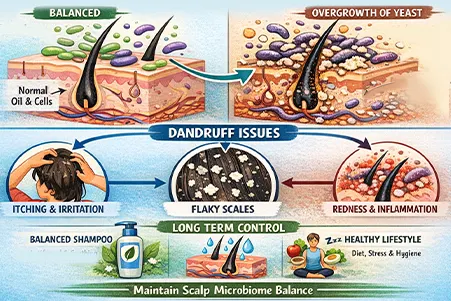
Dandruff often feels like a surface-level problem. You see white flakes on your shoulders or feel constant itching, and you reach for a quick fix. But the real story starts much deeper, on your scalp. Modern research shows that dandruff links closely to the scalp microbiome, a living ecosystem that quietly controls scalp comfort, oil balance, and flake formation.
When this ecosystem stays balanced, the scalp feels healthy and calm. When it shifts, dandruff tends to appear and often keeps coming back. Understanding this science helps you manage flakes more effectively and support long-term scalp health.
Why is the Scalp Microbiome Important for Scalp Health?
The scalp is home to millions of microscopic organisms, including bacteria and fungi. Together, they form the scalp microbiome. In a healthy state, these microbes coexist without causing irritation. They help regulate oil, support the scalp’s natural barrier, and protect the scalp from external stressors.
Problems start when this balance shifts. Excess oil, infrequent cleansing, harsh products, or environmental changes can disturb the microbiome. Once disrupted, the scalp becomes more reactive, itchy, and prone to flaking.
Key takeaways
● The scalp microbiome consists of bacteria and fungi that protect scalp health
● A balanced microbiome keeps the scalp calm and comfortable
● Disruption increases sensitivity, oil imbalance, and flakes
Scalp Microbiome and Dandruff: Understanding the Connection
Dandruff does not develop randomly. It often appears when certain fungi on the scalp grow more than they should. One fungus, Malassezia, naturally lives on most scalps. In small amounts, it causes no trouble.
However, when oil levels rise or cleansing becomes inconsistent, Malassezia multiplies. It feeds on scalp oils and releases by-products that irritate the skin. This irritation speeds up skin cell turnover, which leads to visible flakes and itching.
Key takeaways
● Dandruff links directly to microbiome imbalance
● Malassezia is present on most scalps but causes issues when overgrown
● Excess oil fuels fungal growth and flake formation
What Happens When the Scalp Microbiome Becomes Imbalanced?
An imbalanced scalp microbiome creates a chain reaction. First, oil production increases or spreads unevenly. Then fungal activity rises. The scalp barrier weakens, allowing irritation to build.
You may notice persistent itching, redness, tightness, or flakes that return soon after washing. This explains why dandruff often feels stubborn. Without restoring microbiome balance, flakes continue to reappear.
Key takeaways
● Imbalance triggers excess oil and irritation
● The scalp barrier weakens over time
● Flakes return when the root cause remains untreated
Can an Unhealthy Scalp Microbiome Cause Dandruff?
Yes, scalp microbiome imbalance directly contributes to dandruff. It does not mean poor hygiene. Even people who wash regularly can experience flakes if their cleansing routine does not control fungal overgrowth or protect scalp balance.
Dandruff becomes a cycle. Oil feeds fungus, fungus irritates the scalp, and irritation causes more flaking. Breaking this cycle requires care that targets the microbiome rather than masking symptoms.
Key takeaways
● Microbiome imbalance is a leading dandruff cause
● Dandruff is not linked to lack of cleanliness alone
● Long-term control needs targeted scalp care
Signs That Your Scalp Microbiome Is Unhealthy
Your scalp often gives clear signals when balance is off. Frequent flakes, itching that worsens between washes, and scalp discomfort are common signs. Some people also notice oily roots with dry, flaky patches.
If dandruff returns quickly after shampooing, it usually points to an unresolved microbiome issue rather than temporary dryness.
Key takeaways
● Persistent flakes and itch indicate imbalance
● Oiliness with flakes suggests fungal overgrowth
● Quick recurrence signals an untreated root cause
Why Dandruff Keeps Coming Back
Many dandruff solutions focus only on removing flakes. While this offers short-term relief, it does not prevent recurrence. When the scalp microbiome remains disrupted, Malassezia continues to thrive.
Long-term control depends on regular, gentle cleansing combined with active ingredients that reduce fungal overgrowth while respecting scalp balance. Consistency matters as much as formulation.
Key takeaways
● Flake-only treatments give short-term relief
● Dandruff returns when microbiome balance stays disrupted
● Ongoing care supports lasting results
How to Support Scalp Microbiome Balance for Long-Term Control?
A healthy scalp routine starts with cleansing that removes excess oil without stripping the skin. Anti-dandruff shampoos designed for regular use help control fungal activity while maintaining comfort, especially for oily scalps that tend to trigger recurring flakes. One should look at targeted formulations that effectively remove oil, buildup and fungal growth while respecting the scalp’s natural environment.
Formulations developed through scalp science focus on restoring balance rather than aggressively drying the scalp. Lemon Fresh Anti-Dandruff Shampoo from Head & Shoulders is created to target dandruff-causing fungi while remaining gentle and pH balanced for everyday use.
Infused with citrus essences, this shampoo helps manage excess oil and refresh the scalp while staying suitable even for colour-treated or chemically treated hair. This balanced approach helps keep flakes under control while supporting long-term scalp health.
Key takeaways
● Gentle, regular cleansing supports microbiome balance
● Targeted formulas help control fungal growth
● Consistent care reduces recurring dandruff
Final Thoughts
Dandruff is not just a cosmetic issue. It reflects what happens beneath the surface of your scalp. When the scalp microbiome stays balanced, flakes remain under control and comfort improves. By choosing consistent, microbiome-friendly care, you support not only visible results but also long-term scalp health. Understanding the science empowers you to move beyond temporary fixes and take control of dandruff at its source.
FAQs
What causes dandruff at a scientific level?
Dandruff develops when the scalp microbiome becomes imbalanced. Excess oil allows dandruff-linked fungi to grow, which irritates the scalp and speeds up skin cell shedding, leading to flakes and itch.
How can the scalp microbiome be rebalanced?
Regular cleansing with a gentle, pH-balanced anti-dandruff shampoo, such as Lemon Fresh Anti-Dandruff Shampoo from Head & Shoulders, helps control excess oil and dandruff-causing fungi. Consistent care supports a healthier scalp environment over time.
Can gut imbalance affect dandruff?
Gut health may influence skin conditions, but dandruff mainly results from scalp-level factors like oil production and microbial imbalance. Managing scalp care remains the most effective approach.
How do I tell if my scalp microbiome is unhealthy?
Frequent flakes, persistent itching, redness, or dandruff that returns quickly after washing often indicate an imbalanced scalp microbiome.
Why does dandruff keep coming back?
Dandruff tends to return when the underlying scalp imbalance is not addressed. Without ongoing care to manage oil and fungal growth, flakes can reappear repeatedly.