
What Causes Greasy Hair? The Science Behind Oily Scalp & How to Fix It
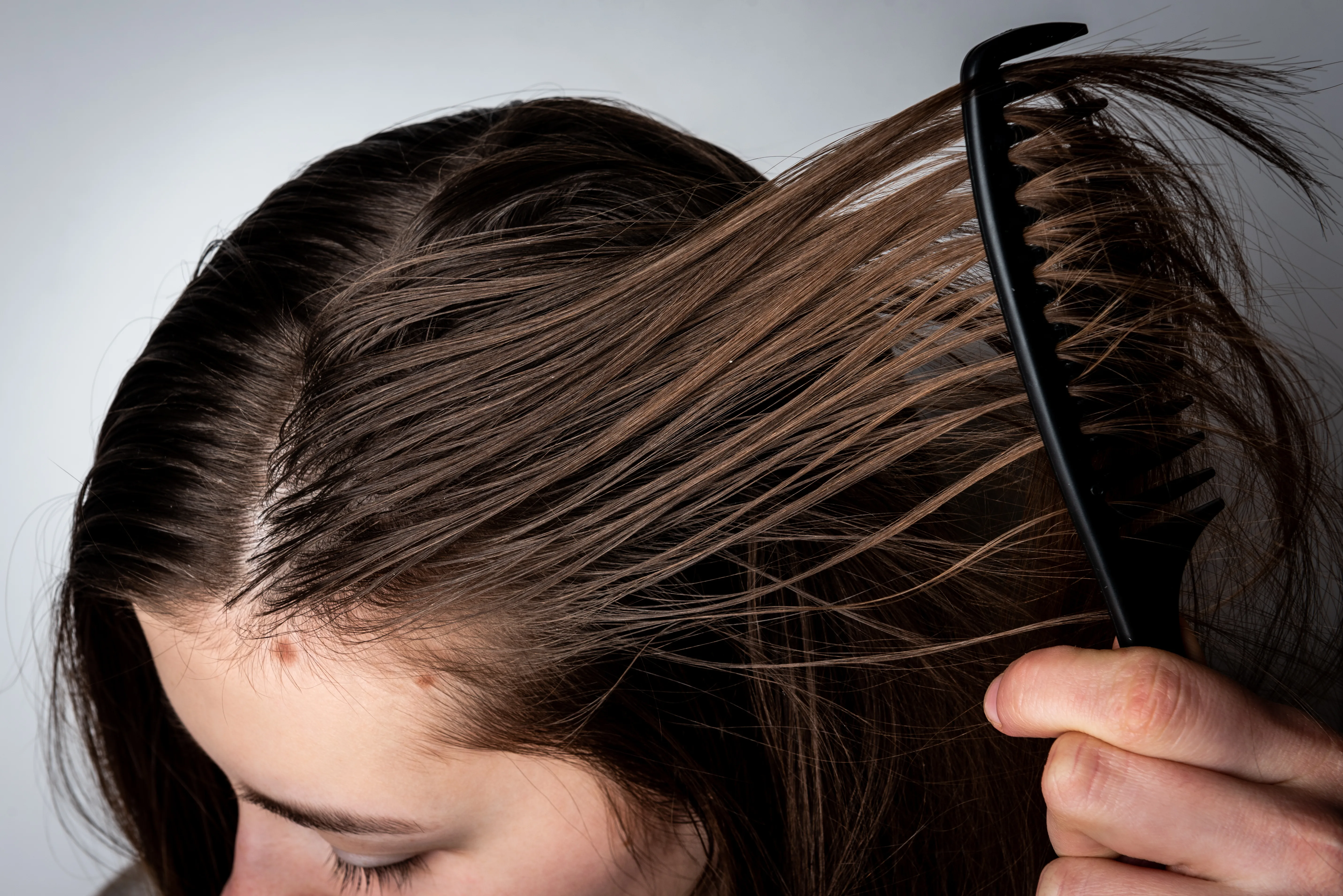
We've all been there, you've washed your hair the night before, woken up, and somehow your roots already look like they belong to someone who hasn't showered in a week. Whether it’s Mumbai’s sticky monsoon humidity, the grime of a long Delhi commute, or an overactive scalp, greasy hair is a common frustration. It always seems to appear at the worst possible moment — before a big meeting, a date, or simply a day when you want to feel your best.
But here's the thing: greasy hair isn't random. There's real biology behind it, and understanding oily hair causes and oily scalp meaning can help you tackle the problem at its root — quite literally.
Table of Contents
What Is Greasy Hair — The Sebum Feedback Loop
8 Causes of Greasy Hair — With the Science
Greasy Hair & Dandruff — The Oily Scalp Connection
How to Treat Greasy Hair — What Actually Works
What Is Greasy Hair — The Sebum Feedback Loop
Every strand of your hair grows out of a follicle, and nestled alongside each follicle is a tiny sebaceous gland. These glands produce sebum — a waxy, oil-like substance designed to lubricate the hair shaft, lock in moisture, and protect your scalp from environmental aggressors. In the right amounts, sebum is your hair's best friend. It binds the outer cuticle layer together and prevents the frizz and breakage that come with moisture loss.
The trouble begins when these glands go into overdrive. Excess sebum seeps through the follicle opening, coats the shaft, and accumulates fastest at the roots — because the roots are closest to the source. Add sweat, pollution, and product residue, and you've got classic greasy hair.
Key Takeaways
-
Greasy hair starts at the scalp, where sebaceous glands attached to each follicle produce sebum to protect and moisturise the hair.
-
When these glands become overactive, excess oil builds up fastest at the roots and combines with sweat, pollution, and product residue.
-
Common signs of excess oil production include greasy roots within 24 hours, flat hair, sticky scalp texture, and visible buildup.
5 Signs Your Scalp Is Producing Too Much Oil
- Hair looks greasy within 24 hours of washing
- Scalp feels slick or sticky to the touch
- Hair appears flat and lifeless with no volume
- Hairstyles refuse to hold throughout the day
- Visible oil buildup concentrated at the roots
8 Causes of Greasy Hair — With the Science
Understanding what drives excess sebum production helps you treat it properly rather than guessing. Here are the eight main oily hair causes, along with the biological mechanism behind each:
| Cause | Biological Mechanism | India Relevance |
|---|---|---|
| Hormones (DHT/Androgens) | Testosterone converts to DHT via the 5-alpha-reductase Type I enzyme, which is concentrated in scalp sebaceous glands. DHT binds to androgen receptors and signals sebocytes to enlarge and produce more lipids. | Puberty, PCOS (particularly common amongst Indian women), and the menstrual cycle |
| Genetics | Inherited androgen receptor density and 5-alpha-reductase activity determine your baseline oil production — some people are simply predisposed to oilier scalps. | Family history of oily skin or hair |
| Over washing | Harsh shampoos strip natural sebum from the scalp, which it then overcompensates by producing more oil. This creates a vicious cycle: the more you wash, the oilier your scalp becomes. Sebum production is governed by hormones, not washing frequency alone. | A common mistake across India, especially in humid climates |
| Wrong Products | Heavy conditioners, silicones, and coconut oil applied directly to the scalp coat the shaft and trap sebum underneath, leading to greasy buildup. | Deep oiling habits popular in India can worsen the problem when oil is applied to roots |
| Diet | High-glycaemic foods spike insulin levels, which activates IGF-1, a protein that in turn switches on SREBP-1 in sebocytes — stimulating more lipid production. Dairy hormones may also directly stimulate sebaceous glands. | Refined carbohydrates, fried foods, and dairy-heavy diets are widespread |
| Stress | Cortisol directly stimulates sebaceous gland receptors, leading to increased sebum output. | Urban metro stress, long commutes, and high-pressure work environments |
| Climate & Environment | Humidity makes sebum more fluid and far more visible on the hair shaft. Pollution particles bind to oil and create a grimy layer. Mumbai's salt-laden tropical air accelerates sebum overproduction; helmets trap heat and sweat against the scalp. | Monsoon season, Mumbai and Delhi pollution, daily helmet use |
| Under-washing & Poor Hygiene | Infrequent shampooing allows sebum, dead skin cells, and dirt to accumulate on the scalp. Unclean hairbrushes and pillowcases transfer bacteria and grime back onto freshly washed hair. | Retain as part of good hair hygiene practice |
Key Takeaways
- Hormones, genetics, stress, diet, and climate all influence how much oil your scalp produces at a biological level.
- Everyday habits such as over washing, under-washing, heavy oiling, and using the wrong products can worsen greasy buildup.
- India-specific factors including humidity, pollution, helmets, PCOS, and high-pressure urban lifestyles can intensify oily scalp concerns.
Greasy Hair & Dandruff — The Oily Scalp Connection
If you've ever noticed that your dandruff gets worse precisely when your scalp is at its oiliest, that's no coincidence. Understanding the oily scalp meaning goes beyond aesthetics — it has a direct bearing on scalp health.
An excess of sebum on the scalp creates the perfect feeding ground for a naturally occurring fungus called Malassezia globosa. This fungus breaks down sebum into oleic acid, a fatty acid to which roughly 3 billion people worldwide have a sensitivity. If you're among them, your body responds with redness, persistent scalp itching, and the characteristic white-yellow oily flakes of dead skin cells.
In Mumbai's tropical climate, this Malassezia–sebum cycle intensifies dramatically. Instead of the usual 28-day skin cell shedding cycle, skin cells are pushed to the surface in as little as 5–7 days, clumping together as oily, yellowish flakes. The result is dandruff that feels heavier, stickier, and harder to shift than the dry, white flakes many people associate with the condition.
This is precisely why an anti-dandruff ingredient like Piroctone Olamine (PO) is particularly effective for oily, dandruff-prone scalps. PO targets Malassezia at the source while preserving the scalp's natural moisture barrier — unlike harsher actives that can strip and irritate.
Key Takeaways
- Excess sebum creates the ideal environment for Malassezia globosa, the fungus closely linked to dandruff.
- In humid Indian climates, the Malassezia–sebum cycle can accelerate skin shedding, leading to oily, sticky flakes and scalp irritation.
- Piroctone Olamine (PO) helps target the fungus behind dandruff whilst maintaining the scalp’s natural moisture barrier.
How to Treat Greasy Hair — What Actually Works
Wash Frequency-
Most people benefit from washing every other day. During winter, 3 times a week may suffice; during Mumbai's monsoon, daily washing may be necessary if you're sweating heavily. One important myth to bust: washing less often does not "retrain" your sebaceous glands i.e. make your scalp produce less oil over time. These glands are controlled by hormones, not by surface oil levels — so skipping washes simply allows buildup to worsen.Shampoo Technique -
Focus lather on the scalp and roots, not the lengths of your hair. If using an anti-dandruff shampoo, leave it on for 3–5 minutes before rinsing to allow active ingredients to work. Always rinse with lukewarm water as hot water stimulates sebaceous glands and encourages more oil production. You can use the Head & Shoulders Deep Cleanse Shampoo to fight dandruff-causing microbes and deter them from coming again.Product Selection -
Avoid heavy silicones, applying coconut oil directly to the scalp, and over-conditioning. Choose lightweight, volumising shampoo formulas. Incorporate a clarifying shampoo once a week to remove product and sebum buildup that regular shampooing may not fully address.Diet Adjustments -
Reduce your intake of high-glycaemic foods (white bread, rice, sugary snacks) and dairy. Instead, increase foods rich in zinc (pumpkin seeds, chana), vitamin B6 (bananas, potatoes), and omega-3 fatty acids (flaxseeds/alsi, walnuts/akhrot) — all of which help regulate sebaceous gland activity.Choose the Right Shampoo -
For scalps dealing with both oiliness and dandruff, look for a shampoo containing Piroctone Olamine, which directly targets the Malassezia fungus that thrives in sebum-rich environments, without disrupting your scalp's protective barrier.Head & Shoulders Cool Menthol Anti- Dandruff Shampoo and Head & Shoulders Deep Cleanse Shampoo are formulated specifically for oily, dandruff-prone scalps — offering a refreshing, targeted clean that addresses both concerns in one step.Key Takeaways
- Balanced scalp care matters: wash appropriately for your climate, use lukewarm water, and focus shampoo application on the scalp and roots.
- Avoid heavy oils, silicones, and over-conditioning; instead, opt for lightweight products and support scalp health through diet.
- For oily, dandruff-prone scalps, PO-based shampoos can help manage excess oil and fungal buildup without over-stripping the scalp.
When to See a Dermatologist
Whilst most cases of greasy hair respond well to the steps above, there are times when professional advice is warranted. Consult a dermatologist if:
- Greasiness persists for 4 or more weeks despite consistent routine changes
- You notice hair loss, bald patches, or open scalp sores alongside the oiliness
- You experience severe itching, redness, or inflammation
- Oiliness spreads to your face, eyebrows, or chest (this may indicate seborrhoeic dermatitis)
- You suspect an underlying hormonal condition such as PCOS or a thyroid disorder
Key Takeaways
- Persistent greasiness lasting 4+ weeks despite routine changes may signal an underlying issue.
- Symptoms such as hair loss, scalp sores, severe redness, itching, or inflammation warrant professional assessment.
- Oiliness extending beyond the scalp or suspected hormonal conditions such as PCOS or thyroid disorders should be evaluated by a dermatologist.
Greasy hair is not simply a hygiene issue — it is a biological one. From the DHT-driven sebaceous glands working overtime to the Malassezia fungus feeding on surplus sebum, every element of oily hair has a root cause that can be understood and addressed. Whether you're navigating Mumbai's relentless humidity, managing stress-induced oil spikes, or simply trying to break a stubborn overwashing cycle, the science points to the same solution: treat the scalp, not just the hair.
Start by identifying which of the eight oily hair causes applies most to you, adjust your routine accordingly, and choose products — like those with Piroctone Olamine — that work with your scalp biology rather than against it. With the right approach, clean, healthy, voluminous hair is well within reach even on the most humid of monsoon mornings.
Frequently Asked Questions
What causes oily hair?
Oily hair is primarily caused by overactive sebaceous glands driven by androgens particularly DHT. The enzyme 5-alpha-reductase converts testosterone into DHT within scalp glands, signalling them to enlarge and produce more oil. Genetics, stress (via cortisol), high-glycaemic diets, over washing, and India's humid climate can all compound the problem.
How to get rid of oily scalp?
Wash every other day with a gentle anti-dandruff shampoo containing Piroctone Olamine. Avoid heavy oils and silicones on the scalp, use only lukewarm water, eat a balanced low-glycaemic diet, and introduce a clarifying shampoo once a week. Importantly, do not over wash — it triggers even more oil production and worsens the cycle.
Which shampoos are most effective for oily scalp and greasy hair?
Look for shampoos with Piroctone Olamine (targets the dandruff-causing fungus that thrives on excess oil), salicylic acid (exfoliates sebum buildup), or tea tree oil (antimicrobial properties). Avoid heavy moisturising formulas. Head & Shoulders Cool Menthol and Deep Cleanse Shampoos are designed specifically for oily, dandruff-prone scalps and are widely available in India.
Which clarifying shampoos work best for oily scalp and hair loss?
For oily scalps with hair loss concerns, choose a PO-based anti-dandruff shampoo that controls Malassezia — which worsens oily dandruff and inflammation-driven hair fall — while preserving the scalp barrier. Use a clarifying shampoo once a week for a deep cleanse, and a gentle PO formula 2–3 times a week for regular maintenance.