
Flakes, Itch or Oil? Understanding Your Dandruff Type and What It Means for Your Scalp
This blog has been reviewed and approved by
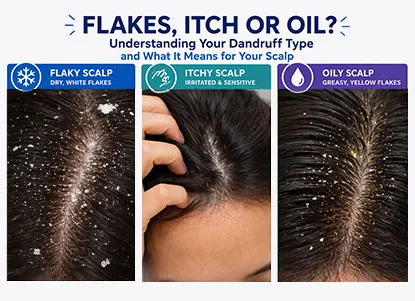
Most people describe dandruff in one word-flakes. But in clinical practice, dandruff rarely shows up the same way in every individual. For some, it’s fine white dust on dark clothes. For others, it’s an itchy scalp that never feels fully clean. And for many, it’s oily, sticky buildup that keeps coming back despite frequent washing. Understanding your dandruff type is the first step toward choosing the right solution, because when it comes to scalp health, not all flakes are created equal.
What Is Actually Causing Dandruff?
Dandruff is not simply a sign of dryness or poor hygiene. It is a recurring scalp condition linked to an imbalance involving a naturally occurring fungus called Malassezia Globosa. This yeast-like organism lives on everyone’s scalp and feeds on sebum — the natural oil your scalp produces. In some individuals, the scalp is more sensitive to the by-products of this fungus. When Malassezia breaks down scalp oil, it can trigger irritation and accelerate skin cell turnover. Instead of shedding invisibly, skin cells clump together and appear as visible flakes. This process may also lead to itchiness, redness and discomfort.
Because oil plays a key role in this cycle, dandruff can occur on oily, dry or combination scalps. It’s not just about how often you wash your hair, it’s about what’s happening at the scalp level.
Why Ingredient Choice Matters
Many people select shampoos based on fragrance, packaging or marketing claims like “smooth hair” or “deep nourishment.” However, regular shampoos are designed to only clean the hair — not treat the root cause of dandruff.
For effective and sustained control, it is important to look for clinically proven anti-fungal ingredients that target Malassezia. One such ingredient is Piroctone Olamine.
Piroctone Olamine works at the scalp level by helping control the growth of dandruff-causing fungus. By addressing the microbial imbalance rather than just washing away visible flakes, it supports restoration of scalp health. With consistent use, shampoos formulated with Piroctone Olamine may help reduce recurrence and maintain long-term control.
Oily, Sticky Flakes
If your scalp feels greasy within a day of washing and flakes appear slightly yellowish or clumped, you may be dealing with oily dandruff. This type is commonly associated with excess sebum production. Oil creates an environment where Malassezia can thrive. The result? Persistent flakes, itchiness and buildup that may feel heavier rather than powdery. Simply using a cosmetic shampoo that removes surface oil may make hair feel cleaner temporarily, but it does not address the fungal imbalance driving recurrence.
Dry, Powdery Flakes
Fine white flakes that fall easily onto clothing are often mistaken for “just dry scalp.” While true scalp dryness can occur due to cold weather or harsh products, recurring powdery flaking is frequently still linked to fungal activity and scalp sensitivity.
If the flakes return quickly even after oiling or moisturising, the underlying issue may not be dryness alone. In such cases, hydration without antifungal care may offer only short-term relief.
Itchy, Irritated Scalp with Scaling
Some individuals experience more pronounced itching, redness or patches of scaling. This may overlap with seborrhoeic tendencies, where inflammation plays a stronger role. Heat, sweat, pollution, helmet use and product buildup can worsen symptoms by disrupting scalp balance.
In all these presentations, one common thread remains: fungal overgrowth combined with scalp sensitivity.
Read the Label, Treat the Cause
If your dandruff keeps returning, it may be a sign that the root cause is not being addressed. Instead of switching products frequently or relying on home remedies, turn the bottle around and read the ingredient list. Look for scalp-care actives such as Piroctone Olamine that are specifically designed to target fungal imbalance. Consistency is key, dandruff is a recurring condition, and ongoing scalp-focused care helps maintain results.
Flakes, itch or oil, these are different expressions of the same underlying scalp imbalance. Understanding your dandruff type allows you to move beyond temporary fixes and choose solutions that work where it matters most: at the scalp. Healthy hair begins with a balanced scalp. And that starts with knowing what to look for, not just on your shoulders, but on your shampoo label. Remember to use your anti dandruff shampoo in every wash. Consistency is what ensures your dandruff does not return.